

More than 80 years ago, Grand Rapids changed what came out of the faucet and helped change dental care around the world.
Now, the public health practice that started right here in West Michigan is caught in a national debate. Apparently, even a glass of tap water can become political.
Grand Rapids Was the First City to Fluoridate Its Water
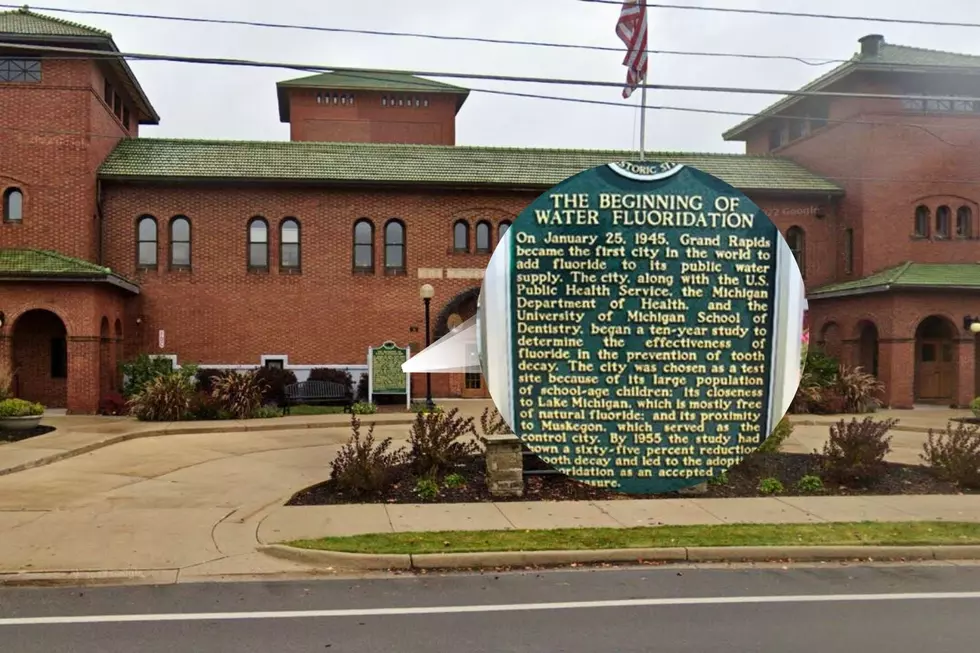
On January 25, 1945, Grand Rapids became the first city in the world to add fluoride to its public drinking water supply. The goal was simple: Find out whether adjusting fluoride levels could help prevent tooth decay.
Researchers tracked the dental health of nearly 30,000 schoolchildren. According to the National Institute of Dental and Craniofacial Research, after 11 years, tooth decay rates among children born after fluoridation began had dropped by more than 60%.
That is a pretty impressive Michigan first. Fewer cavities might not look great on a souvenir T-shirt, but your dentist would appreciate it.

Why Is RFK Jr. Challenging Water Fluoridation?
In April 2025, Robert F. Kennedy Jr. said he planned to tell the CDC to stop recommending community water fluoridation, according to AP News. That announcement described his intended policy change, not a nationwide order to turn off fluoride systems.
The CDC’s published guidance still lists 0.7 milligrams per liter as the recommended concentration. Meanwhile, the EPA has accelerated its review of fluoride’s potential health risks. Decisions about adding fluoride are generally made at the state or local level.

Is Fluoride in Drinking Water Dangerous?
The amount matters, and so does separating established benefits from questions researchers are still studying.
Fluoride occurs naturally in soil, rocks, and water. Community fluoridation adjusts the amount in drinking water to a level intended to help prevent cavities. Fluoride strengthens tooth enamel, making it more resistant to decay.
Too much fluoride during childhood, while teeth are developing, can cause dental fluorosis. Mild cases can appear as white markings on teeth. The recommended water concentration is intended to balance cavity prevention with the risk of fluorosis.
There are also questions about brain development. The National Toxicology Program concluded with moderate confidence that higher fluoride exposure, such as drinking water containing more than 1.5 milligrams per liter, is associated with lower IQ in children.
However, the program says there are not enough data to determine whether drinking water at the recommended U.S. level of 0.7 milligrams per liter affects children’s IQ. An association also does not, by itself, establish cause and effect.
A Michigan First With a Lasting Impact
Grand Rapids helped establish that community water fluoridation could substantially reduce childhood tooth decay. More than eight decades later, the debate involves how to weigh those benefits against potential risks and unanswered research questions.
If you have questions about your family’s fluoride exposure, check your local water system’s fluoride level and discuss it with your dentist, especially when deciding which fluoride products your children should use.
Michigan gave the world an important dental breakthrough. Unfortunately, we still haven’t invented a way to make flossing something people actually look forward to.
These Everyday Items Contain a Potentially Hazardous Chemical (BPA)
Gallery Credit: Kennedy Broadwell
Yuck! The 9 Germiest Surfaces in Your Workplace
Gallery Credit: Scott Clow