
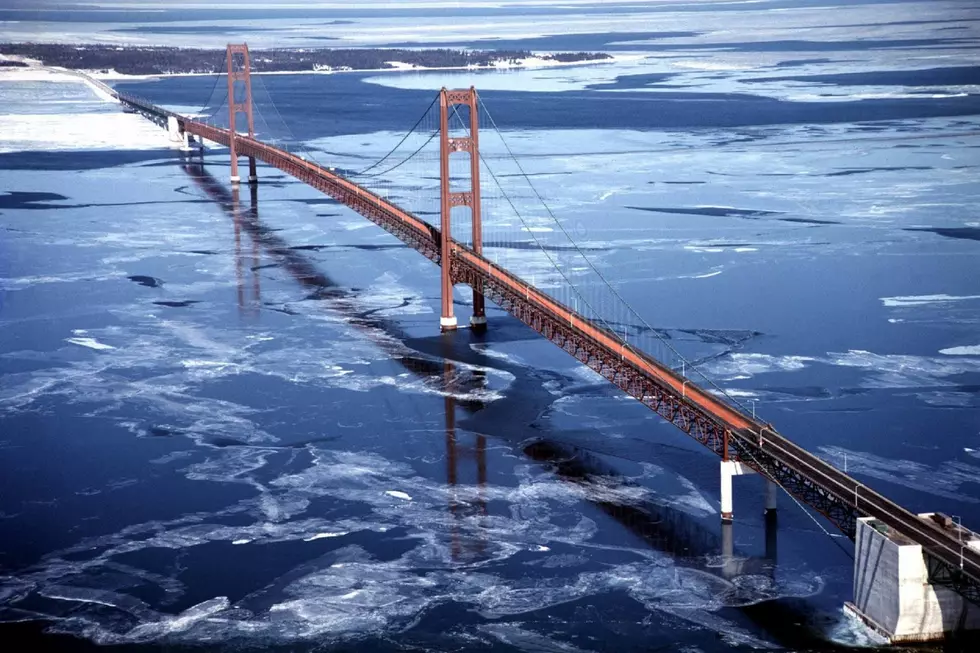
Rare Photo Of The Mackinac Bridge Before It Was Green
Even in today's world of architectural prowess and engineering capabilities, the Mackinac Bridge is a feat of engineering. To this day, it stands as the longest suspension bridge in the Western Hemisphere and the seventh-longest suspension bridge in the world. Part of its engineering might comes from how engineers created a bridge that withstands the four seasons and the drastic cold and winds of the Great Lakes.
As important as all of this is, the other thing this bridge is known for is its looks. From its towering towers to its signature green appearance, it's had most of its life. The Mackinac Bridge is constantly repainted green to protect it from corrosion, keeping it both healthy and clean.

But I say most of its life because when the Mackinac Bridge opened to the public in November 1957, it looked quite different from what it does today. Have you ever wondered what the bridge looks like naked? I doubt it; if you're like me, you probably didn't think it wasn't green and white by default.
READ MORE: Few People Know Michigan Actually Has Two Mackinac Bridges
But according to the Michigan Department of Transportation (MDOT), the Mackinac Bridge spent its first year open to the public without its signature colors. The photo below was taken on February 1st, 1958, and the bridge didn't get painted for the first time until the following summer.

But for most of its life, the Mackinac Bridge Authority reports that the bridge's ivory towers are Federal Standard 595b color number 13711, and the green is Federal Standard 595c color number 14110.
These colors were decided based on an advertisement that depicted the bridge in these colors before official colors were picked.
